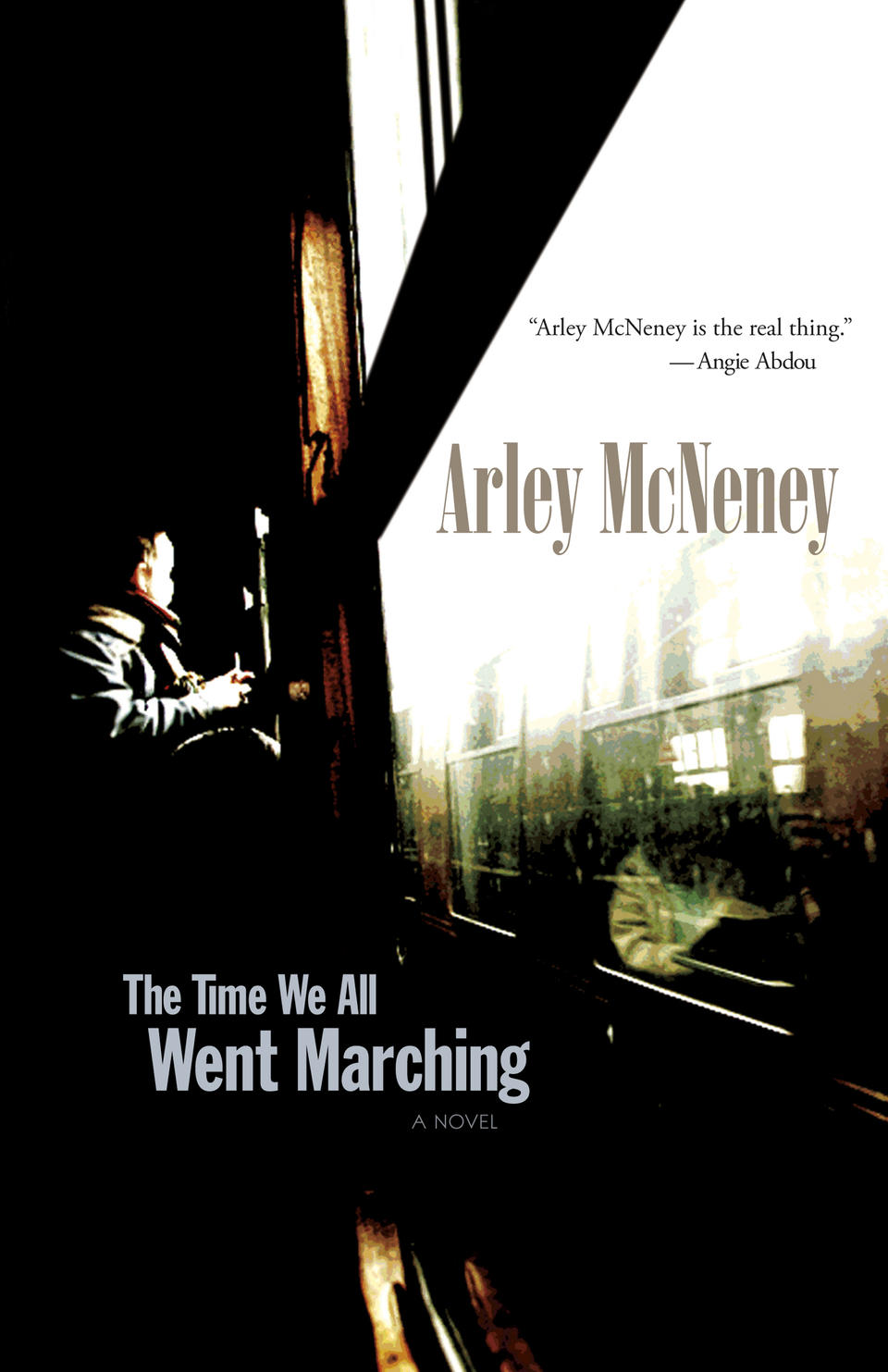
The Time We All Went Marching
- Publisher
- Goose Lane Editions
- Initial publish date
- Sep 2011
- Category
- Literary, Family Life, Historical
-
Paperback / softback
- ISBN
- 9780864926586
- Publish Date
- Sep 2011
- List Price
- $19.95
-
eBook
- ISBN
- 9780864927040
- Publish Date
- Sep 2011
- List Price
- $19.95
Add it to your shelf
Where to buy it
Description
Seduced by Slim's stories of the privations of a cross-country trek that ended in the violence of an historic riot and tales of Depression-era work camps, Edie MacDonald has followed him from mine to mine, where he finds work and she cares for their son, Belly, in the thin shelter of canvas tents. Until now.
Edie has left Slim behind, passed out in an unheated apartment on the coldest day of the year. Boarding a train with Belly, she travels westward. When the train struggles through a snowstorm and possible calamity, the lens shifts between Belly's perspective and Edie's. Only then does Edie broach a crucial question. Should she leave Belly with his grandmother and strike off on her own? Or should she return to Slim, despite his boozy wanderings?
Vivid and evocative, with rich, convincing characters, The Time We All Went Marching is an episodic novel of storytelling, memory, and imagination — about a time in history rarely explored in fiction. Arley McNeney inhabits her characters with breathtaking conviction, reaching deep into the vulnerable solitude of individual perception while seamlessly holding her readers breathless. Mark her. Watch.
About the author
Arley McNeney's first novel, Post, was shortlisted for the Commonwealth Writer's Prize, Best First Novel, Canadian and the Caribbean, and longlisted for the Saskatchewan Best First Novel and for the ReLit awards. An elite athlete, McNeney played on Canada's national wheelchair basketball team from 2001 to 2007, winning two World Championships and a bronze medal at the 2004 Paralympics.
Editorial Reviews
"A fantastic piece of Canadian writing! It covers a period of division and strife in Canada, between political parties, labour and management, and the West and the East."
Darcy From Vancouver
"The Time We All Went Marching is, by far, the best and most satisfying read I've had all year. I fear that not nearly enough people will happen upon it, or have the sincerely good fortune of reading it, and this would be a real shame, because the novel deserves national and lasting recognition. ... The Time We All Went Marching is a rare and exciting blend of historical education and investigation, vibrant and compelling characters, important emotional excavation, and stylish and innovative poetics. ... Arley McNeney is an author who absolutely deserves a national following."
<i>Maple Tree Literary Supplement</i>
"Bringing the struggle of working-class men and women in the 1930s and 1940s to life through luminescent prose."
<i>Briar Patch Magazine</i>
"An amazing work; haunting and imaginative."
Sheri From Vancouver
"McNeney is a gifted writer. ... McNeney deftly captures the confusion, fear, and joylessness of a people living through their own brand of 'tough economic times.' She does us a service by not 'prettying up the truth.'"
<i>Vancouver Sun</i>
"This novel is a stunning achievement. It has the feel of a Michael Ondaatje novel, the same breathtaking language and image, a dream-like quality to the scenes. I may accidentally forget the title of this book, but I will never forget the name Arley McNeney."
<i>Globe and Mail</i>


