X
Contacting facebook
Please wait...
 
Error! Cannot reach service.
Sign up here

Forgot password?

The Only Site Devoted Entirely to Canadian Books

  • Find your next great Canadian read
  • Connect with other book lovers
  • Keep up on the latest in Canadian books and authors
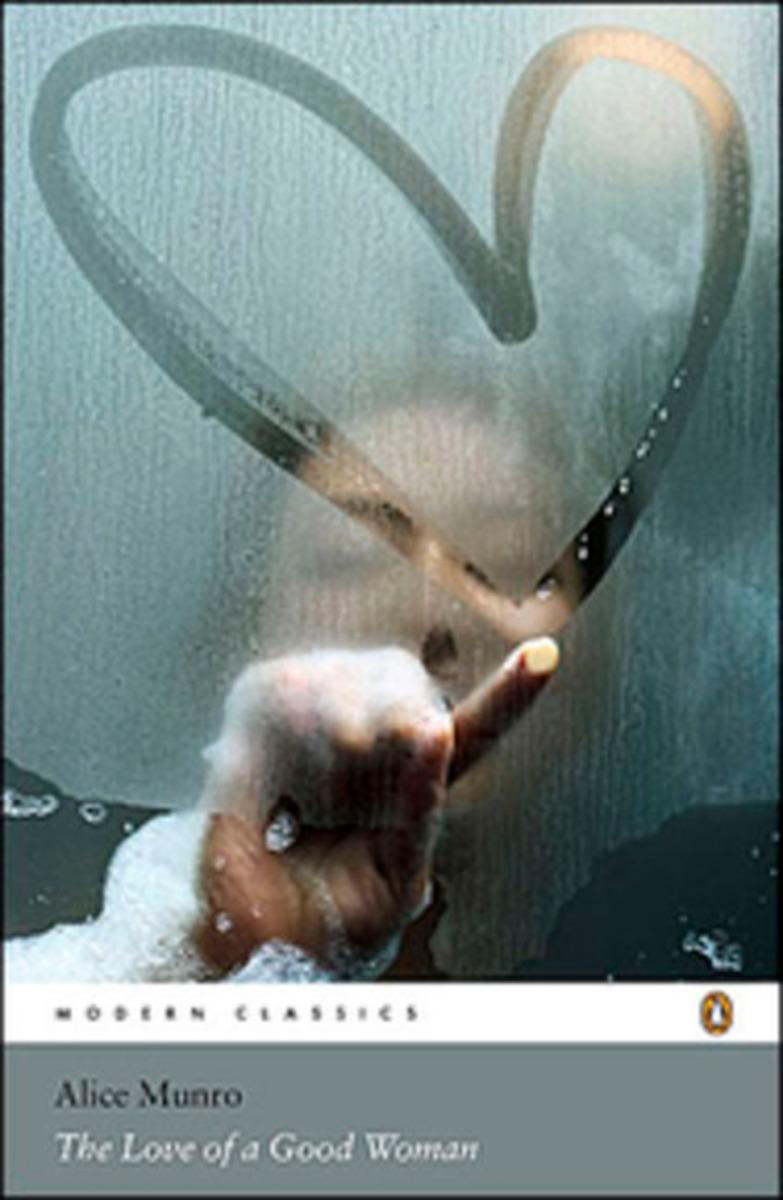
9780771066856_cover

The Love of a Good Woman

by Alice Munro

0 ratings
rated!
rated!
comments: 0
reviews: 0
tagged:
add a tag
Please login or register to use this feature.
literary
list price: $32.99
edition:Hardcover
also available: Paperback Paperback
category: Fiction
published: 1998
ISBN:9780771066856
View Excerpt
Description

All of these eight wonderful stories are about what people will do for love, and the unexpected routes their passion will force them to take.

An old landlady in Vancouver who alarms the just-married narrator with her prim advice about married life – and “the peculiar threat” of a china cabinet that must be washed once a month – is shown to have conspired when young in a crime of passion. A young mother, at the mercy of the “radiant explosion” that comes when she thinks of her secret life, abandons her baby and four-year old to be with her lover in the story “The Children Stay.” A gruff old country doctor in the 1960s is discovered by his daughter to be helping desperate women, his “special patients.” An impetuous young woman meets a visiting Indian student and conceives on a train from Vancouver to Toronto because of “the fact that you couldn’t get condoms around the Calgary station, not for love or money.” An Ontario farm wife’s affair drives her husband to commit a murder; its discovery, years later, will act as a negotiating point for a new, presumably satisfactory, marriage.

The book is clear-eyed about the imperfections of marriage, the clutter of our emotional lives, and the impermanence of love: “Not that that was the end. For we did make up. But we didn’t forgive each other.” Even the shared memories of earlier times prove to be a minefield, and many of the stories track the changes that time brings over generations to families, lovers, and even to friends who share old, intimate secrets about “the prostration of love.”

As always these stories by Alice Munro are shot through with humour, and are as rich as novels. As always the characters in the stories are easily, sometimes uncomfortably, recognizable as people like us. One quote summarizes the delightful surprises that await the reader: “Did you ever think that people’s lives could be like that and end up like this? Well, they can.”

close this panel
Excerpt

Kath and Sonje have a place of their own on the beach, behind  some large logs. They have chosen this not only for shelter from the  occasional sharp wind--they've got Kath's baby with them--but  because they want to be out of sight of a group of women who use  the beach every day. They call these women the Monicas.

The Monicas have two or three or four children apiece. They  are all under the leadership of the real Monica, who walked down  the beach and introduced herself when she first spotted Kath and  Sonje and the baby. She invited them to join the gang.

They followed her, lugging the carry-cot between them. What  else could they do? But since then they lurk behind the logs.

The Monicas' encampment is made up of beach umbrellas,  towels, diaper bags, picnic hampers, inflatable rafts and whales,  toys, lotions, extra clothing, sun hats, Thermos bottles of coffee,  paper cups and plates, and Thermos tubs in which they carry  homemade fruit-juice Popsicles.

They are either frankly pregnant or look as if they might  be pregnant, because they have lost their figures. They  trudge down to the water's edge, hollering out the  names of their children who are riding and falling off logs or the  inflatable whales.

"Where's your hat? Where's your ball? You've been on that  thing long enough now, let Sandy have a turn."

Even when they talk to each other their voices have to be raised  high, over the shouts and squalls of their children.

"You can get ground round as cheap as hamburger if you go to  Woodward's."

"I tried zinc ointment but it didn't work."

"Now he's got an abscess in the groin."

"You can't use baking powder, you have to use soda."

These women aren't so much older than Kath and Sonje. But  they've reached a stage in life that Kath and Sonje dread. They turn  the whole beach into a platform. Their burdens, their strung-out  progeny and maternal poundage, their authority, can annihilate the  bright water, the perfect small cove with the red-limbed arbutus  trees, the cedars, growing crookedly out of the high rocks. Kath  feels their threat particularly, since she's a mother now herself.  When she nurses her baby she often reads a book, sometimes  smokes a cigarette, so as not to sink into a sludge of animal  function. And she's nursing so that she can shrink her uterus and  flatten her stomach, not just provide the baby--Noelle--with  precious maternal antibodies.

Kath and Sonje have their own Thermos of coffee and their  extra towels, with which they've rigged up a shelter for Noelle.  They have their cigarettes and their books. Sonje has a book  by Howard Fast. Her husband has told her that if she has to read  fiction that's who she should be reading. Kath is reading the short  stories of Katherine Mansfield and the short stories of D. H. Lawrence.  Sonje has got into the habit of putting down her own book and picking  up whichever book of Kath's that Kath is not reading at the moment.  She limits herself to one story and then goes back to Howard Fast.

When they get hungry one of them makes the trek up a long  flight of wooden steps. Houses ring this cove, up on the rocks  under the pine and cedar trees. They are all former summer  cottages, from the days before the Lions Gate Bridge was built,  when people from Vancouver would come across the water for  their vacations. Some cottages--like Kath's and Sonje's--are still  quite primitive and cheap to rent. Others, like the real Monica's,  are much improved. But nobody intends to stay here; everybody's  planning to move on to a proper house. Except for Sonje and her  husband, whose plans seem more mysterious than anybody else's.

There is an unpaved crescent road serving the houses, and  joined at either end to Marine Drive. The enclosed semicircle is full  of tall trees and an undergrowth of ferns and salmonberry bushes,  and various intersecting paths, by which you can take a shortcut  out to the store on Marine Drive. At the store Kath and Sonje will  buy takeout French fries for lunch. More often it's Kath who  makes this expedition, because it's a treat for her to walk under the  trees--something she can't do anymore with the baby carriage.  When she first came here to live, before Noelle was born, she  would cut through the trees nearly every day, never thinking of her  freedom. One day she met Sonje. They had both worked at the  Vancouver Public Library a little while before this, though they had  not been in the same department and had never talked to each  other. Kath had quit in the sixth month of pregnancy as you were  required to do, lest the sight of you should disturb the patrons, and  Sonje had quit because of a scandal.

Or, at least, because of a story that had got into the newspapers.  Her husband, Cottar, who was a journalist working for a magazine  that Kath had never heard of, had made a trip to Red China.  He was referred to in the paper as a left-wing writer. Sonje's picture  appeared beside his, along with the information that she worked in the library. There was concern that in her job she might be promoting  Communist books and influencing children who used the library, so  that they might become Communists. Nobody said that she had done  this--just that it was a danger. Nor was it against the law for somebody  from Canada to visit China. But it turned out that Cottar and Sonje were  both Americans, which made their behavior more alarming, perhaps  more purposeful.

"I know that girl," Kath had said to her husband, Kent, when  she saw Sonje's picture. "At least I know her to see her. She  always seems kind of shy. She'll be embarrassed about this."

"No she won't," said Kent. "Those types love to feel  persecuted, it's what they live for."

The head librarian was reported as saying that Sonje had  nothing to do with choosing books or influencing young  people--she spent most of her time typing out lists.

"Which was funny," Sonje said to Kath, after they had  recognized each other, and spoken and spent about half an hour  talking on the path. The funny thing was that she did not know how  to type.

She wasn't fired, but she had quit anyway. She thought she  might as well, because she and Cottar had some changes  coming up in their future.

Kath wondered if one change might be a baby. It seemed to her  that life went on, after you finished school, as a series of further  examinations to be passed. The first one was getting married. If  you hadn't done that by the time you were twenty-five, that  examination had to all intents and purposes been failed. (She  always signed her name "Mrs. Kent Mayberry" with a sense of  relief and mild elation.) Then you thought about having the first  baby. Waiting a year before you got pregnant was a good idea.  Waiting two years was a little more prudent than necessary. And  three years started people wondering. Then down the road  somewhere was the second baby. After that the progression got  dimmer and it was hard to be sure just when you had arrived at  wherever it was you were going.

Sonje was not the sort of friend who would tell you that she was trying to have a baby and how long she'd been trying and what techniques she was using. She never talked about sex in that way, or about her periods or any behavior of her body--though she soon told Kath things that most people would consider much more shocking. She had a graceful dignity--she had wanted to be a ballet dancer until she got too tall, and she didn't stop regretting that until she met Cottar, who said, "Oh, another little bourgeois girl hoping she'll turn into a dying swan." Her face was broad, calm, pink skinned--she never wore any makeup, Cottar was against makeup--and her thick fair hair was pinned up in a bushy chignon. Kath thought she was wonderful looking--both seraphic and intelligent.

Eating their French fries on the beach, Kath and Sonje discuss characters in the stories they've been reading. How is it that no woman could love Stanley Burnell? What is it about Stanley? He is such a boy, with his pushy love, his greed at the table, his self-satisfaction. Whereas Jonathan Trout--oh, Stanley's wife, Linda, should have married Jonathan Trout, Jonathan who glided through the water while Stanley splashed and snorted. "Greetings, my celestial peach blossom," says Jonathan in his velvety bass voice. He is full of irony, he is subtle and weary. "The shortness of life, the shortness of life," he says. And Stanley's brash world crumbles, discredited.

Something bothers Kath. She can't mention it or think about it. Is Kent something like Stanley?

One day they have an argument. Kath and Sonje have an unexpected and disturbing argument about a story by D. H. Lawrence. The story is called "The Fox."

At the end of that story the lovers--a soldier and a woman named March--are sitting on the sea cliffs looking out on the Atlantic, towards their future home in Canada. They are going to leave England, to start a new life. They are committed to each other, but they are not truly happy. Not yet.

The soldier knows that they will not be truly happy until the woman gives her life over to him, in a way that she has not done so far. March is still struggling against him, to hold herself separate from him, she is making them both obscurely miserable by her efforts to hang on to her woman's soul, her woman's mind. She must stop this--she must stop thinking and stop wanting and let her consciousness go under, until it is submerged in his. Like the reeds that wave below the surface of the water. Look down, look down--see how the reeds wave in the water, they are alive but they never break the surface. And that is how her female nature must live within his male nature. Then she will be happy and he will be strong and content. Then they will have achieved a true marriage.

Kath says that she thinks this is stupid.

She begins to make her case. "He's talking about sex, right?"

"Not just," says Sonje. "About their whole life."

"Yes, but sex. Sex leads to getting pregnant. I mean in the normal course of events. So March has a baby. She probably has more than one. And she has to look after them. How can you do that if your mind is waving around under the surface of the sea?"

"That's taking it very literally," says Sonje in a slightly superior tone.

"You can either have thoughts and make decisions or you can't," says Kath. "For instance--the baby is going to pick up a razor blade. What do you do? Do you just say, Oh, I think I'll just float around here till my husband comes home and he can make up his mind, that is our mind, about whether this is a good idea?"

Sonje said, "That's taking it to extremes."

Each of their voices has hardened. Kath is brisk and scornful, Sonje grave and stubborn.

"Lawrence didn't want to have children," Kath says. "He was jealous of the ones Frieda had from being married before."

Sonje is looking down between her knees, letting sand fall through her fingers. "I just think it would be beautiful," she says. "I think it would be beautiful, if a woman could."

Kath knows that something has gone wrong. Something is wrong with her own argument. Why is she so angry and excited? And why did she shift over to talking about babies, about children? Because she has a baby and Sonje doesn't? Did she say that about Lawrence and Frieda because she suspects that it is partly the same story with Cottar and Sonje?

When you make the argument on the basis of the children, about the woman having to look after the children, you're in the clear. You can't be blamed. But when Kath does that she is covering up. She can't stand that part about the reeds and the water, she feels bloated and suffocated with incoherent protest. So it is herself she is thinking of, not of any children. She herself is the very woman that Lawrence is railing about. And she can't reveal that straight out because it might make Sonje suspect--it might make Kath herself suspect--an impoverishment in Kath's life.

Sonje who has said, during another alarming conversation, "My happiness depends on Cottar."

My happiness depends on Cottar.

That statement shook Kath. She would never have said it about Kent. She didn't want it to be true of herself.

But she didn't want Sonje to think that she was a woman who had missed out on love. Who had not considered, who had not been offered, the prostration of love.

From the Trade Paperback edition.

close this panel
Contributor notes

Alice Munro’s fame abroad is matched by the admiration she enjoys in Canada, where she has won the Governor General’s Award three times. Awards for her past collections include the W.H. Smith Prize in the U.K.; the National Book Circle Critics Award in the U.S.; the PEN/Malamud Award for Excellence in Short Fiction; the Rea Award for the Short Story; the Giller Prize, the Trillium Prize and the Libris Award. She lives in Ontario and British Columbia.

close this panel
Editorial Review

Superb...Long ago, Virginia Woolf described George Eliot as one of the few writers 'for grown-up people.' The same might today, and with equal justice, be said of Alice Munro.--Michael Gorra, New York Times Book Review

A writer for the ages--Dan Cryer, Newsday

Alice Munro is indisputably a master. Like all great writers, she helps sharpen perception...Her imagination is fearless...A better book of stories can scarcely be imagined.--Greg Varner, Washington Post Book World

A riveting collection...a lovely book. Munro's stories move through the years with a sneaky grace.--Georgia Jones-Davis, San Francisco Chronicle

A triumph...certain to seal her reputation as our contemporary Chekhov--Carol Shields, Mirabella

Superlative...She distills a novel's worth of dramatic events into a story of 20 pages.--Erik Huber, Time OutM

These astonishing stories remind us, yet again, of the literary miracles Alice Munro continues to perform.--Francine Prose, Elle

close this panel
The Love of a Good Woman 4 out of 5 based on 1 ratings.
Write a review Community Reviews
Care to write a review? Sign Up or Sign In to contribute your voice.
close this panel

Also available as an ebook

Invite your Facebook friends to 49th Shelf!

About the Author

Alice Munro

Alice Munro grew up in Wingham, Ontario, and attended the University of Western Ontario. She has published ten previous books-Dance of the Happy Shades; Lives of Girls and Women; Something I've Been Meaning to Tell You; Who Do You Think You Are?; The Moons of Jupiter; The Progress of Love; Friend of My Youth; Open Secrets; The Love of a Good Woman; and Hateship, Friendship, Courtship, Loveship, Marriage-as well as Selected Stories, an anthology of stories culled from her dazzling body of work.

During her distinguished career, Munro has been the recipient of many awards and prizes, including the W.H. Smith Award in the United Kingdom and, in the United States, the National Book Critics Circle Award, the PEN/Malamud Award for Excellence in Short Fiction, the Lannan Literary Award, and the Rea Award for the Short Story.

In Canada, her prize-winning record is so extraordinary-three Governor General's Awards, two Giller Prizes (one of which was for Runaway), the Trillium Book Award, the Jubilee Prize, and the Libris Award, among many others-that it has been ironically suggested that as such a perennial winner, she no longer qualifies for new prizes. Abroad, acclaim continues to pour in. Both Runaway and Hateship, Friendship, Courtship, Loveship, Marriage won the Commonwealth Writers' Prize Best Book Award, Caribbean and Canada region, and were chosen as one of the Books of the Year by The New York Times.

Alice Munro's stories appear regularly in The New Yorker, as well as in The Atlantic Monthly, Saturday Night, and The Paris Review. She and her husband divide their time between Clinton (in “Alice Munro country”), Ontario, and Comox, British Columbia.

Author profile page >

Other titles by Alice Munro

more >

This book has been listed 1 time

Paid Advertisement

User Activity

more >
Paid Advertisement
You can do more on 49th Shelf when you're a member.

Check it out!